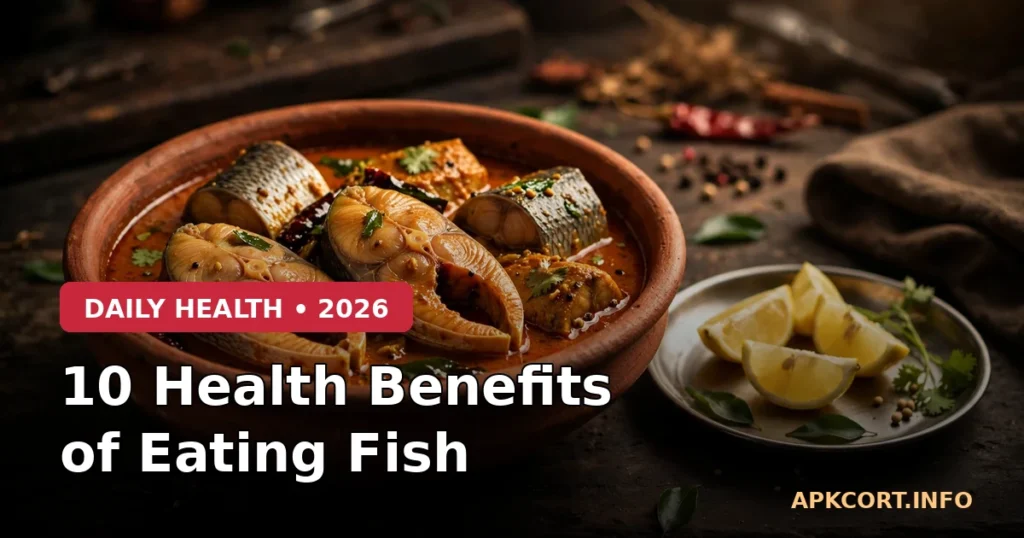
Ask a Bengali to choose between chicken and fish, and watch their face. For crores of Indians along the coast, from Bengal to Kerala to Goa, fish is not health food. It is Tuesday lunch. But if you grew up in Delhi or Lucknow, fish might be that thing you eat twice a year at a restaurant.
That is a shame, because the health benefits of eating fish are some of the best documented in all of nutrition. Omega-3 fats, complete protein, vitamin D: fish delivers all three in one affordable meal. And you do not need imported salmon. A 150-rupee kilo of sardines from a Chennai market beats most supplements on value. Let us get into it.
What Is Inside Fish: The Nutrition Numbers
Per 100 grams of cooked fish, you get roughly 18 to 25 grams of complete protein. Lean fish like rohu and pomfret carry very little fat. Oily fish like sardine, mackerel and hilsa carry about 1 to 2.5 grams of omega-3 EPA and DHA per 100 grams.
Put that against the suggested daily intake of 250 to 500 mg of EPA plus DHA. A 100-gram serving of sardines gives you roughly 1,400 mg. One fish meal covers several days' worth in a single sitting.
Fish also brings vitamin D (mainly the oily varieties), vitamin B12, iodine, selenium and zinc. Chicken gives you protein. Fish gives you protein plus the fats your brain is literally built from. And for the fruit side of a balanced diet, the 10 impressive benefits of eating apples daily shows what one cheap fruit can do: https://apkcort.info/?p=224
Health Benefits of Eating Fish for Your Heart and Brain
Most of the famous research on fish centers on these two organs. Here is what it actually says.
1. A stronger heart
People who eat fish regularly show lower rates of heart disease in large population studies. The American Heart Association suggests two servings of fish per week, and Indian cardiologists give the same advice. Omega-3s help keep triglycerides in check and support healthy blood pressure. If heart trouble runs in your family, this is the cheapest dietary insurance around.
2. A sharper brain and better memory
Your brain is nearly 60 percent fat, and DHA is one of its major building blocks. Studies link regular fish intake with slower age-related memory decline. Students in coastal states swear by fish curry before exams. That is tradition talking, but the DHA science points in the same direction.
3. Better eyesight as you age
DHA is also a key structural part of your retina. Regular fish eaters show lower rates of age-related macular degeneration, the eye condition that blurs central vision in old age. Your eyes eat what you eat.
4. A steadier mood
This one surprised researchers as well. Several large studies link higher fish consumption with lower rates of depression. Omega-3s play a role in how brain cells signal each other. Fish will not replace therapy or medication, but as part of your diet, the link is consistent enough to take seriously.
5. Less joint stiffness
Omega-3s have mild anti-inflammatory effects. Arthritis patients who eat fish regularly often report less morning stiffness. It is not a cure, and nobody honest would call it one, but many rheumatologists suggest it alongside regular treatment.
More Health Benefits of Eating Fish for the Rest of Your Body
6. Complete protein for muscles
Fish protein contains all essential amino acids, and your body absorbs it easily. After a workout, a grilled seer fish steak does what a protein shake claims to do, except it is real food. For lifelong vegetarians considering fish, this is usually the reason they make the switch.
7. Stronger bones from vitamin D
Oily fish is one of the few genuine food sources of vitamin D. Indians are widely vitamin D deficient despite all the sunshine, because we stay indoors and cover up outdoors. A weekly sardine or mackerel meal helps close that gap, alongside actual sunlight.
8. Better skin and hair
Omega-3s and protein support skin elasticity and hair strength from the inside. Dermatologists often ask about diet when patients complain of dry, dull skin. Fish eaters tend to have that part covered without expensive creams.
9. A stronger immune system
Selenium, zinc and vitamin D all support immune function, and fish delivers all three in one meal. During the seasonal flu rounds that empty Indian offices every winter, a fish-eating household has a small but real nutritional edge.
10. Easier weight management
Fish is high in protein and low in calories. A hundred grams of grilled rohu is under 120 calories with about 20 grams of protein. Protein keeps you full, so you eat less through the rest of the day. If you are trying to lose weight naturally without medicines, swapping one fried snack or red-meat dinner for grilled fish each week is a painless place to start: https://apkcort.info/lose-weight-naturally-without-medicines/
The Best Fish to Eat in India, With Real Prices
You do not need Norwegian salmon at 1,500 rupees a kilo. Indian waters are generous. Here is what to buy:
- Sardine (mathi, tarali): the omega-3 king of Indian fish. Rs 100 to Rs 150 per kilo. Bony and humble, nutritionally brilliant.
- Mackerel (bangda, ayla): another oily, affordable star. Rs 120 to Rs 180 per kilo.
- Rohu: the North Indian staple. Mild and versatile, takes any masala well. Rs 180 to Rs 250 per kilo.
- Katla: similar to rohu, slightly sweeter flesh. Rs 180 to Rs 260 per kilo.
- Pomfret (paplet): the premium white fish with few bones. Rs 500 to Rs 700 per kilo. Worth it for guests.
- Seer fish (vanjaram, surmai): firm steaks that grill beautifully. Rs 400 to Rs 600 per kilo.
- Hilsa (ilish): Bengal's beloved monsoon fish. Rs 800 to Rs 1,500 per kilo. A delicacy, not a daily fish.
Honest advice: eat sardines and mackerel weekly for omega-3, and save pomfret and hilsa for occasions. Your wallet and your heart both win that trade.
How to Cook Fish Without Ruining It
The healthiest fish becomes junk food the moment it is deep-fried in reused oil. Indian cooking already has better options: Bengali shorshe maachh in mustard oil, Kerala meen curry with coconut and kodampuli, Goan fish curry, or simple grilled surmai with lemon and salt.
A few rules that actually matter. Use fresh oil and keep frying light, or skip frying entirely. Do not overcook the fish; it turns rubbery and loses texture. On mercury: avoid shark, swordfish and king mackerel as regular meals, especially during pregnancy. Small local fish like sardines are low in mercury and safe to eat often.
A light fish curry is also far easier on the stomach than a heavy mutton meal. If digestion troubles you regularly, read about the types of stomach pain and their causes so you can tell a food issue from a medical one: https://apkcort.info/types-of-stomach-pain-causes/
<h2>Questions People Actually Ask</h2>