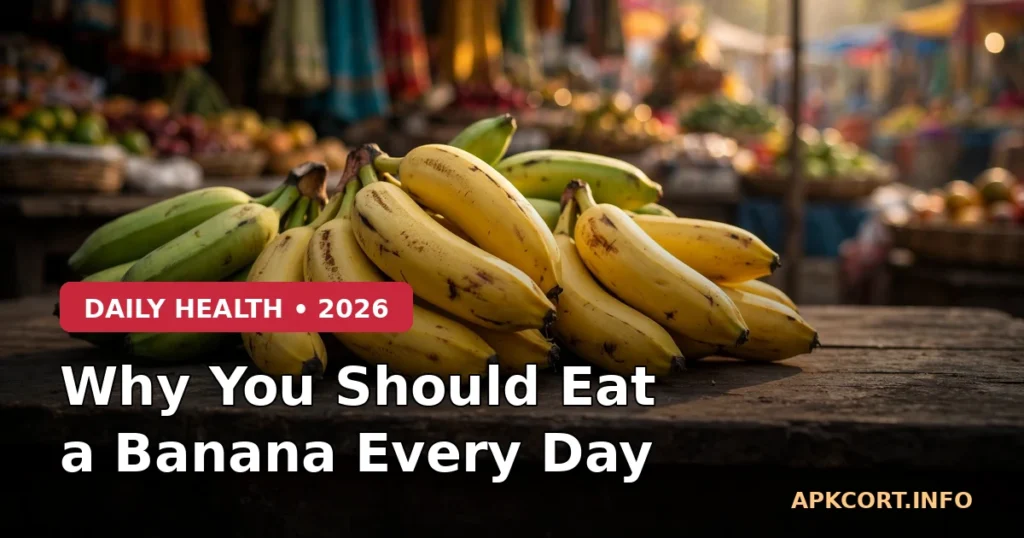
The banana on your kitchen counter is judging you. It has been sitting there since Tuesday, slowly collecting brown spots, while you reached for biscuits at 4 pm and wondered why your energy crashed by 6. Honestly? That five-rupee fruit could have handled the whole situation.
Here is the thing about India. We grow bananas in Maharashtra, Tamil Nadu, Karnataka and Gujarat by the truckload, and your local sabziwala sells them cheaper than a cutting chai. You do not need an imported superfood with a foreign name. You need to eat a banana every day. Let me show you exactly why, with real numbers, the best Indian varieties and prices, and the honest caveats nobody mentions.
Banana Nutrition: What Is Actually Inside One Fruit
Forget the hype. Here is what a medium banana (about 118 grams) gives you, based on standard nutrition data:
A medium banana carries roughly 105 calories, 27 grams of carbohydrates, 3.1 grams of fiber, 1.3 grams of protein and 14 grams of natural sugar. The minerals are the real story: about 422 mg of potassium, 32 mg of magnesium and 0.4 mg of vitamin B6, plus around 10 mg of vitamin C. Per 100 grams, that works out to roughly 89 calories and 358 mg of potassium.
That vitamin B6 number matters more than people realize. B6 helps your body convert food into usable energy and supports the brain chemicals that regulate mood. Most Indians get B6 from dal and whole grains, but a banana is one of the easiest top-ups you will find. No cooking, no recipe, just peel and eat.
Steady Energy Without the 4 PM Crash
Picture this. It is 3:30, your stomach growls, and the office canteen has samosas. You eat one. By 5, you are sleepy and reaching for chai. Sound familiar?
A banana works differently. Its natural sugars come wrapped in fiber, so they enter your blood slowly instead of all at once. Sports coaches have known this forever. Tennis players eat bananas between sets. Marathon runners in Mumbai grab them at aid stations along the route.
For the rest of us, one banana 30 minutes before a workout, a morning walk or a long commute beats any energy drink, and it costs less than ten rupees. Real talk: it will not replace sleep. But as a pre-gym snack in the five-to-ten rupee range, nothing touches it.
Your Heart Runs on Potassium
Indian food is delicious and salty. Pickles, papad, namkeen: sodium is everywhere. Potassium helps balance sodium in your body, and most of us do not get enough of it. The daily target sits around 4,700 mg, and one banana gives you roughly 422 mg. That is nearly a tenth of the day's need in a snack you peel with your hands.
Do I think a banana alone fixes blood pressure? No. But higher potassium intake is linked with healthier blood pressure levels in study after study, and a banana is the cheapest potassium source in any Indian market. The DASH eating plan that doctors suggest for blood pressure lists bananas as a staple fruit. Cheap, no cooking, no excuse.
Gentle on the Stomach When Acidity Strikes
Bananas are one of the few fruits you can eat during an acidity bout without regret. They are low in acid, soft in texture, and their fiber feeds the good bacteria in your gut. Ripe bananas digest easily. Green ones can cause gas in some people, so pick yellow bananas with a few brown spots when your stomach is acting up.
I am not saying a banana replaces an antacid. But as a daily habit, it keeps digestion steadier than skipping breakfast and surviving on chai through the morning. If stomach trouble keeps coming back, read about the types of stomach pain and their causes so you know when it is a food issue and when it is time to see a doctor: https://apkcort.info/types-of-stomach-pain-causes/
Will Eating a Banana Every Day Make You Gain Weight?
The honest answer: a 105-calorie banana will not make you fat. Eating three bananas on top of your normal meals and then blaming the fruit? That is on the meals.
Here is what actually matters. Slightly green bananas contain resistant starch, which digests slowly and keeps you full for longer. A banana before lunch can stop you from overeating at lunch. The people who gain weight from bananas are usually drinking banana milkshakes loaded with sugar and ice cream, then blaming the banana.
If your goal is to lose weight naturally without medicines, a banana as a planned snack fits perfectly. It is sweet enough to kill cravings and filling enough to prevent a binge: https://apkcort.info/lose-weight-naturally-without-medicines/
Which Banana Should You Buy? Indian Varieties and Prices
Walk into any Indian market and you will see more than one kind of banana. Here is a quick guide with typical prices:
- Robusta: the common long yellow one. Rs 40 to Rs 60 per dozen. Your everyday banana.
- Yelakki: small, sweet and aromatic. Karnataka's favourite. Rs 50 to Rs 70 per dozen.
- Nendran: the big Kerala plantain, usually cooked or made into chips. Rs 60 to Rs 80 per dozen.
- Red banana: reddish skin, slightly tangy, richer in certain antioxidants. Rs 80 to Rs 100 per dozen.
- Rasthali: thin-skinned and very sweet, common in Tamil Nadu. Rs 60 to Rs 90 per dozen.
Any of them works for a daily habit. Buy slightly green ones if you shop weekly. They ripen on your counter over three to four days, so you always have one ready.
7 Easy Ways to Eat a Banana Every Day
The same banana, the same way, every day gets boring. Rotate through these:
- Plain, as your 11 am or 4 pm snack.
- Sliced over curd with a spoon of honey.
- Blended with milk and a pinch of elaichi. Instant banana milkshake, no added sugar needed.
- Mashed onto toast with peanut butter before the gym.
- Chopped into oats or dalia for breakfast.
- Frozen overnight, then blended. It tastes like ice cream and costs like a banana.
- For kids' tiffin: a small Yelakki fits any lunchbox and survives the school bag.
One honest truth: a banana alone is a carb snack, not a complete meal. Pair your fruit habit with real protein through the day. For ideas, check the health benefits of eating fish and see why a simple rohu dinner is one of the cheapest protein upgrades an Indian family can make: https://apkcort.info/health-benefits-of-eating-fish/
Who Should Eat Fewer Bananas
Honest caveats, because no food is perfect for everyone:
- If you have diabetes, count the carbs. One small banana with a handful of peanuts is a safer snack than two large bananas alone.
- If you have kidney disease, talk to your doctor first. High potassium can be a problem when kidneys cannot filter it well.
- Latex allergy and banana allergy sometimes overlap. Rare, but real.
For everyone else, one to two bananas a day is a perfectly safe habit.
<h2>Questions People Actually Ask</h2>