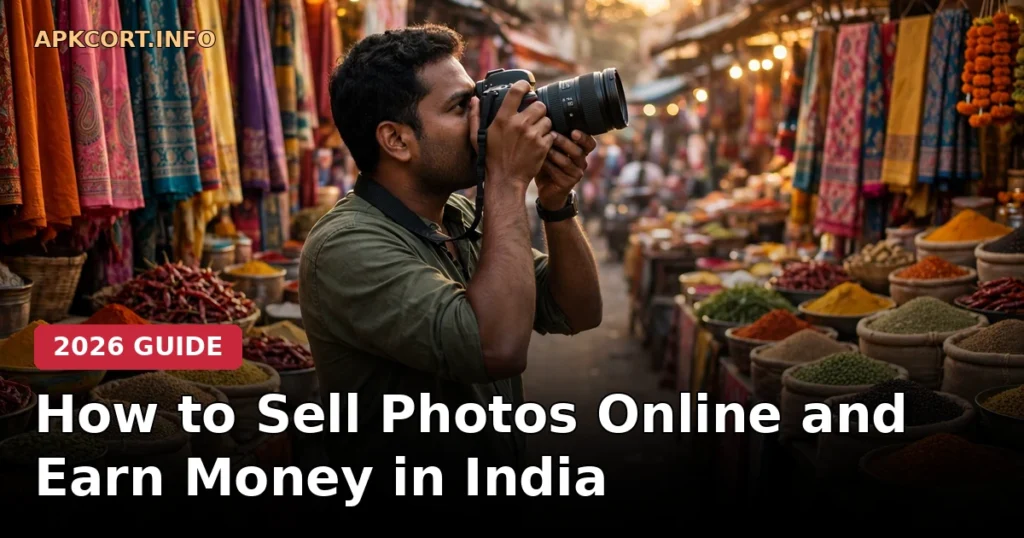
Your phone camera is probably better than the DSLR a professional used ten years ago. And somewhere right now, a blogger in Delhi is paying a few dollars to download a photo of an auto rickshaw in the rain. A textbook publisher in Mumbai needs Diwali celebration shots. That buyer could be paying you.
Selling photos online is one of the most honest forms of passive income out there. You shoot once, upload once, and the same photo can sell hundreds of times while you sleep. But let me be straight: this is not fast money. It is slow, compounding money. The photographers who earn well treat it like a small business, not a side hobby.
Here is the complete, honest guide for India: current royalty rates, payout rules, and how the flood of AI-generated images has changed the game.
Why Selling Photos Online Still Works in 2026
Let us address the elephant in the room first. AI image generators can now create stunning fake photos in seconds. Has that killed stock photography? Not quite. It killed generic stock: the smiling handshake, the perfect salad bowl, the flawless business team. That stuff is now worth almost nothing.
What AI cannot do is shoot the real world. A real Holi celebration in Vrindavan. A real Mumbai local at rush hour. A real vendor tossing jalebis into hot oil. Buyers who need authenticity and cultural specificity still pay for real photography. That is where an Indian photographer has an unfair advantage: you live inside one of the most visually rich, under-photographed markets in the stock world.
The business model is simple. You upload photos to stock agencies. Buyers pay the agency to download them. The agency keeps a cut and pays you a royalty every time. One photo, hundreds of potential sales, for years.
Where to Sell: The Best Platforms in 2026
Shutterstock: the volume giant
Shutterstock is the largest stock marketplace in the world, with over 2 billion image downloads a year. Royalties run 15 to 40 percent depending on your lifetime earnings tier (resets every January 1st). In practice, most contributors earn $0.10 to $0.38 per subscription download, $0.75 to $2.85 for on-demand packs, and $28 to $120 for enhanced licenses.
The minimum payout is $35, paid monthly via PayPal, Payoneer or Skrill. All three work with Indian bank accounts. Reviews take 1 to 3 days, and your first sale often lands within a week.
Shutterstock suits volume shooters: 500 to 1,000 quality images typically brings $100 to $300 a month. The math is brutal at small scale and beautiful at large scale.
Adobe Stock: the designer's default
Adobe Stock pays a flat 33 percent royalty on photos: roughly $0.33 per subscription download for new contributors, rising to $0.38 or more after 10,000 lifetime sales. A $9.99 single image sale earns you about $3.30.
The payout threshold is just $25, the lowest among the big platforms. Since Adobe Stock is built into Photoshop and Creative Cloud, designers and marketers buy here by default, which means steady demand for commercial lifestyle content.
iStock and Getty Images: the premium lane
Getty and iStock pay 15 to 45 percent depending on your agreement and exclusivity: $1.50 to $8 or more per download, with enhanced licenses reaching $50 to $500. The catch is a curated acceptance process with strict editorial standards. This lane suits professional-level commercial, travel or editorial work.
Alamy: the generous option
Alamy offers some of the highest commissions in the industry, around 40 to 50 percent, and accepts a wide range of content including editorial. Prices per sale run higher but download volume is lower than Shutterstock. A good second home for photos that do not fit the microstock mould.
500px, EyeEm and Wirestock
500px has a licensing marketplace with a strong community feel. EyeEm distributes through Getty. Wirestock pushes your photos to multiple agencies from a single upload and takes a 15 percent cut for the convenience. A legitimate shortcut if manual uploading is stopping you from uploading at all.
My suggestion: start with Shutterstock plus Adobe Stock. Add Alamy in month two.
What Sells: Niches That Pay in India
Most beginners go wrong here. They upload pretty sunsets and flowers. The market is drowning in pretty sunsets. You need photos that buyers search for and cannot easily find.
Indian festivals and culture. Diwali diyas, Holi colours, Durga Puja pandals, Eid celebrations, Onam sadhya, Ganesh Visarjan. Festival content sells year after year because the calendar repeats. Shoot every festival you attend.
Street life and transport. Auto rickshaws, Mumbai locals, Delhi metro, crowded bazaars, chai stalls, monsoon streets. Western buyers constantly search for "authentic India" imagery and find the same ten clichés. Give them the real thing.
Indian food. Not fine dining. Street food: golgappe, vada pav, dosa on a tawa, jalebi frying, filter coffee. Food bloggers and restaurant brands buy these constantly.
Business and lifestyle, Indian edition. Offices with Indian professionals, students studying, doctors in hospitals, farmers in fields, yoga and wellness. Corporate buyers want diversity that is not staged in a Western studio.
Nature and travel. The Himalayas, Kerala backwaters, Rajasthan forts, Goa beaches, Ladakh landscapes. Travel content has a long shelf life.
Seasonal and topical. Election rallies, cricket stadiums, wedding season. Editorial-style shots of real events sell on Getty and Alamy.
One free tip: search Shutterstock for your city or profession. If the results are thin or outdated, you have found your niche. A photographer in Indore shooting local street food faces less competition than one more person shooting the Taj Mahal.
You Do Not Need an Expensive Camera
Honestly? Your phone is enough to start. Modern phones from Xiaomi, Samsung, Realme and Apple pass stock agency technical requirements, provided you shoot in good light and keep the resolution high.
What matters more than the camera:
- Light. Shoot in the morning or late afternoon. Harsh noon sun ruins more photos than cheap lenses ever will.
- Sharpness. Agencies reject blurry photos instantly. Hold steady, tap to focus, check at full zoom before uploading.
- Clean backgrounds. A distracting background kills a commercial photo. Move two steps to the left. Problem solved.
- Model releases. Any recognisable person in a commercial photo needs a signed release. Both Shutterstock and Adobe provide the forms in their contributor apps.
When you start earning, reinvest in a used DSLR or mirrorless camera. OLX and local camera shops in Delhi's Chandni Chowk or Mumbai's Fort area have solid options under Rs 25,000. But do not wait for gear. Start with the phone in your pocket today.
Edit lightly. Snapseed (free) or Lightroom Mobile (free tier) is enough. Agencies reject over-processed HDR nightmares. Clean, natural, well-exposed. That is the bar.
The Honest Math: What You Will Actually Earn
Real numbers, not motivational quotes. Typical contributor figures for 2026:
Under 100 photos usually earns less than $10 to $20 a month. That is the testing phase, and almost everyone starts here.
At 500 to 1,000 quality images, $100 to $300 a month becomes realistic across Shutterstock and Adobe Stock combined. Roughly Rs 8,000 to Rs 25,000. Not life-changing, but real money for photos sitting on a hard drive.
Full-time contributors with several thousand images report $500 to $2,000 a month or more. The top earners shoot video too: a single HD stock video clip can earn $30 to $60 per download, roughly 100 times what a photo earns.
The uncomfortable truth: your first 200 uploads will feel pointless. New photos need time to get discovered. Contributors who upload 10 to 20 files every week for a year build momentum that compounds. The ones who upload 50 photos, earn $3, and quit were never really in the game.
Five Mistakes That Keep Beginners at Zero
- Uploading only what they like instead of what buyers search. Your artistic sunset means nothing if 40,000 identical sunsets already exist. Search demand first, shoot second.
- Ignoring keywords. A photo without good keywords is invisible. Write 25 to 40 relevant keywords per image: what, where, who, mood, concept.
- Skipping model releases. One missing release can get your account flagged. Get the signature at the shoot, not three months later.
- Giving up because the first payout feels far away. Reaching $35 on Shutterstock takes most beginners 2 to 4 months. That is normal, not failure.
- Accidentally opting into exclusive deals. Most big agencies allow non-exclusive selling, so you can sell the same photo on Shutterstock, Adobe and Alamy simultaneously. Read the terms before you click.
Beyond Stock Sites: Four More Ways to Sell Photos
Stock agencies are the foundation, but they are not the ceiling.
Sell prints and wall art. Upload your best landscapes to print-on-demand sites or sell directly through Instagram. A framed print of Varanasi ghats at sunrise sells itself during wedding season gifting.
Wedding and event photography. This is where the serious money is in India. A wedding photographer in a tier-2 city charges Rs 50,000 to Rs 1.5 lakh per wedding; in metros, Rs 2 lakh plus is common. Stock income is passive; weddings fund your camera upgrades.
Product photography for D2C brands. Thousands of small Indian brands on Instagram and Shopify need product shots and cannot afford agencies. A freelancer charging Rs 2,000 to Rs 5,000 per shoot finds work fast. If you enjoy client work, read how students earn from freelancing on Fiverr in India to see how creative services sell online.
Teach what you learn. Once you have 500 photos selling, beginners will pay to learn your workflow. A short mobile photography course in Hindi costs nothing to create.
If photography is one of several income streams you are building, our guide on how to make money online without investment in India shows how it fits alongside 11 other zero-investment methods.
Getting Paid in India: Payouts and Tax
PayPal, Payoneer and Skrill all support withdrawals to Indian banks. Payoneer is the favourite among contributors because its forex rates beat PayPal's, and money typically lands in 2 to 5 business days.
Handle two things properly. First, taxes: stock photo income is taxable in India under "income from other sources" or as professional income, depending on scale. Second, keep records: download your annual earning statements from each platform. Your future self, filing ITR, will thank you. I am not a chartered accountant, so talk to one once the income becomes meaningful.
<h2>Questions People Actually Ask</h2>